

De-Toxification Therapy: A Practical, Safe Approach to Resetting the Body and Mind
“Detox” is one of the most used (and misused) wellness words today. Some people imagine it means harsh fasting or surviving on juices for days. Others connect it with traditional systems like Ayurveda, where cleansing is done as a structured therapy—often alongside rejuvenation practices. The truth sits in the middle: your body already has built-in detox systems (liver, kidneys, gut, lungs, skin), but lifestyle overload can still leave you feeling heavy, sluggish, inflamed, or mentally tired. The goal of De-Toxification Therapy should be simple—support the body’s natural elimination pathways safely, while improving digestion, sleep, energy, and clarity.
This article explains what De-Toxification Therapy can mean in a clinical wellness context, how it’s commonly done (including Ayurvedic approaches), who may benefit, and the safety points that matter most.
What “Detoxification” Really Means

From a medical perspective, your body continuously filters and removes waste products through the liver and kidneys, and your gut helps eliminate what you don’t need. Many “detox diets” marketed online claim to flush out vague “toxins,” but strong evidence supporting those dramatic claims is limited, and the body already does most of the work on its own.
So why do people still feel better after a “detox”? Often it’s because they temporarily stop ultra-processed foods, alcohol, excess sugar, irregular sleep, and dehydration—habits that strain digestion and recovery. A well-planned detox program can act as a reset, but it should be Structured, Nourishing, and Personalized, not extreme.
De-Toxification Therapy in Ayurveda
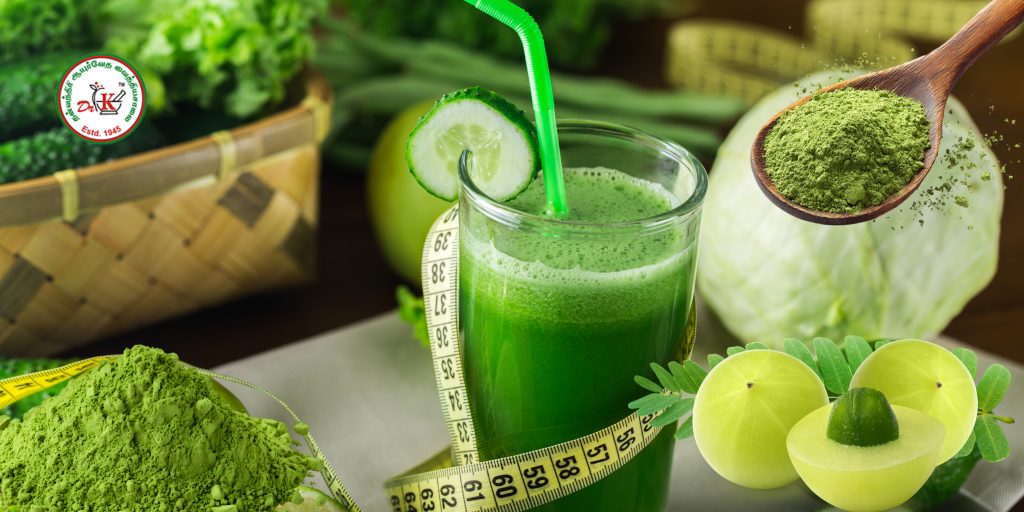
In Ayurveda, detoxification is closely linked to improving digestion and clearing accumulated metabolic waste (often described as ama). Traditional detox programs frequently use Panchakarma, a classical cleansing and balancing approach that may include preparatory steps, targeted therapies, and post-care routines. Panchakarma is described in scientific literature as a structured “cleansing/relaxation” intervention with defined start and end points.
Depending on the individual, an Ayurvedic detox plan may involve:
- Digestive correction (light, warm, easily digestible meals)
- External therapies such as oil application and sweating therapies (as recommended)
- Lifestyle and sleep regulation
- Herbal support under supervision
- Post-therapy rejuvenation to rebuild strength and stabilize results
Importantly, reputable sources emphasize safety concerns and the need for careful guidance—especially regarding products, dosing, and quality control.
Signs You Might Consider a Guided Detox Program
A supervised De-Toxification Therapy plan is commonly chosen when someone experiences:
- Persistent heaviness, bloating, gas, or poor appetite
- Irregular bowel habits
- Low energy or feeling “sluggish” despite rest
- Poor sleep quality or waking tired
- Stress overload, mental fatigue, or low motivation
- Frequent headaches (non-emergency), body aches, or stiffness
- Skin dullness or breakouts related to diet/lifestyle
These are not diagnostic signs of toxin buildup—but they can signal that digestion, sleep, hydration, and daily routine need correction. If symptoms are severe, sudden, or persistent, medical evaluation is essential.
Common Components of a Safe Detoxification Therapy Plan
1) Food that reduces overload—not food deprivation
A safe detox is not starvation. It usually focuses on:
- Warm, cooked foods (soups, khichdi-like meals, steamed vegetables)
- Adequate protein (as suitable)
- Fiber for gut movement
- Plenty of fluids (water, herbal infusions)
Extreme juice cleanses can be low in protein and fiber and may cause blood sugar swings or weakness in some people.
2) Hydration and daily elimination support
Hydration supports digestion and regular bowel movement. Gentle routines—walking, stretching, steady meal timing—often make a big difference.
3) Stress reduction as part of detox
Stress affects gut function, sleep, cravings, and inflammation. Traditional programs often include body therapies and calming routines. Even in modern wellness settings, detox works best when stress and sleep are addressed.
4) Supervised therapies, only if appropriate
If you’re choosing Ayurvedic detox therapies (including Panchakarma-style programs), they should be selected based on your constitution, symptoms, and health status—never copied from social media trends.
5) Post-detox “rebuild” phase
This is the most overlooked part. After cleansing, the body needs stable meals, consistent sleep, and gradual return to normal foods. This is where people maintain results.
Who Should Avoid Detox Programs (or Take Medical Approval First)
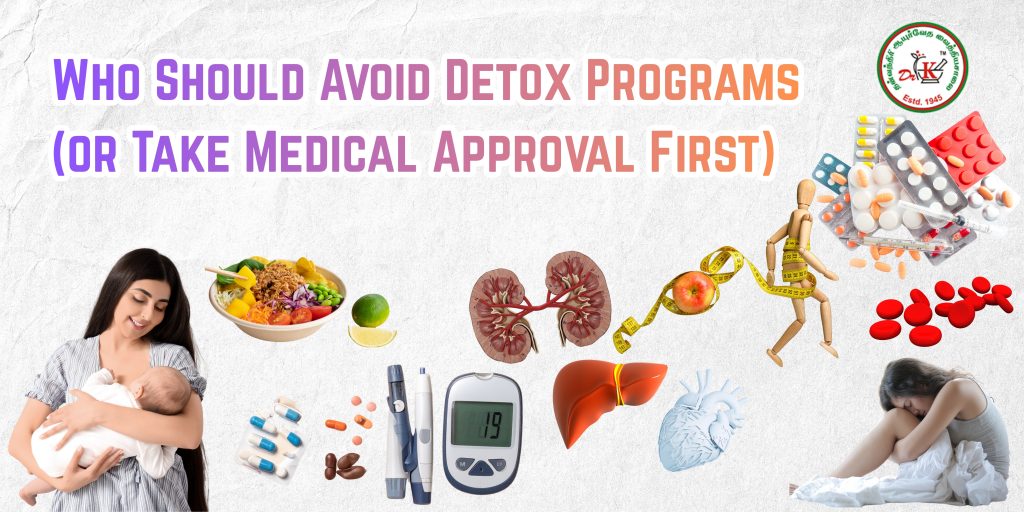
De-Toxification Therapy should be approached carefully if you are:
- Pregnant or breastfeeding
- Diabetic on medication (risk of sugar fluctuations)
- Having kidney, liver, or heart disease
- Underweight, anemic, or recovering from illness
- Managing an eating disorder (current or past)
- Taking multiple medications (possible interactions)
Also, be cautious with unverified supplements. Some Ayurvedic preparations can have safety concerns if poorly manufactured or contaminated; quality and professional supervision matter.
What Results to Expect (Realistic Benefits)
A well-designed, supervised detox plan may help you feel:
- Lighter and less bloated
- More regular digestion
- Improved sleep routine
- Better mental clarity and mood stability
- More energy (especially after the first few days)
However, detox is not a miracle cure. Sustainable benefits come from what you continue afterward—food habits, daily movement, sleep timing, and stress management.
Conclusion
De-Toxification Therapy should be viewed as a guided reset—not a punishment and not a crash diet. The body already has detox systems, but modern habits can overload digestion and recovery. A safe detox program focuses on supportive nutrition, hydration, routine correction, and (if you choose Ayurveda) carefully selected therapies under trained supervision. Avoid extreme cleanses, prioritize quality and safety, and treat detox as the start of a healthier lifestyle—not a one-time shortcut.
Read also: Weight Reduction Therapy – A Holistic Ayurvedic Path to Healthy Living
