
In today’s fast-paced world, maintaining a healthy lifestyle has become more important than ever. Poor eating habits, stress, irregular sleep, and processed foods have contributed to many lifestyle disorders such as obesity, diabetes, digestive problems, anxiety, and fatigue. Ayurveda, the ancient Indian system of natural healing, offers a holistic approach to wellness through proper diet, daily routines, and balanced living.
An Ayurvedic diet is not just about eating healthy foods. It focuses on eating according to your body constitution, improving digestion, balancing the doshas, and maintaining harmony between the mind and body. By following Ayurvedic diet principles, individuals can experience improved digestion, better immunity, increased energy, mental clarity, and overall well-being.
This article explores essential Ayurvedic diet tips for a healthy lifestyle and explains how you can incorporate these timeless principles into your daily routine.
Understanding Ayurveda and Diet
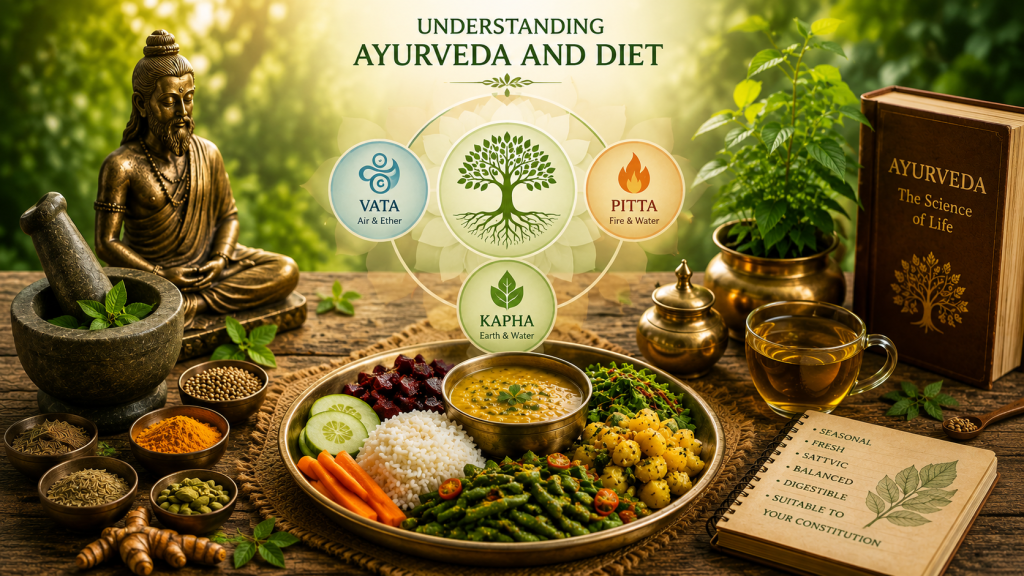
Ayurveda is based on the concept of three doshas:
- Vata – Air and space elements
- Pitta – Fire and water elements
- Kapha – Earth and water elements
Every individual has a unique combination of these doshas. Health problems occur when the doshas become imbalanced. Ayurveda believes that food is medicine and that proper eating habits help maintain dosha balance.
An Ayurvedic diet emphasizes:
- Fresh and natural foods
- Seasonal eating
- Mindful eating
- Proper digestion
- Individualized nutrition
Unlike modern diet trends, Ayurveda focuses on long-term health and sustainability rather than temporary weight loss.
Importance of Digestion in Ayurveda
According to Ayurveda, digestion is the foundation of health. The digestive fire, known as Agni, plays a major role in converting food into energy and nutrients.
When digestion is strong:
- Nutrients are absorbed properly
- Immunity improves
- Energy levels remain stable
- Toxins do not accumulate
When digestion is weak:
- Bloating and acidity occur
- Fatigue increases
- Weight gain develops
- Toxins (Ama) accumulate in the body
Therefore, Ayurvedic dietary practices mainly focus on strengthening digestion.
Essential Ayurvedic Diet Tips for a Healthy Lifestyle
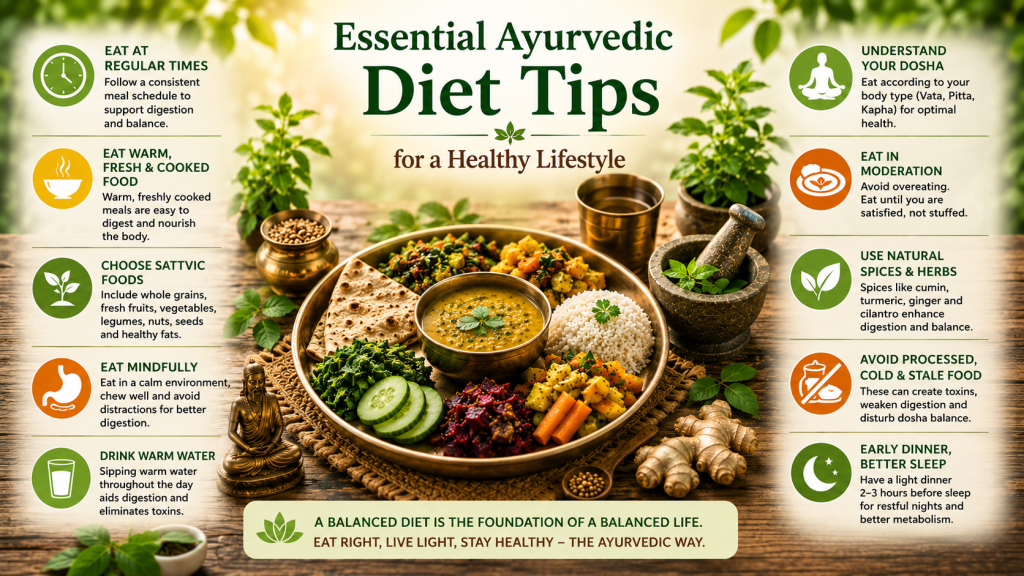
1. Eat According to Your Dosha
One of the core principles of Ayurveda is personalized nutrition. Different foods affect each dosha differently.
Vata Dosha Diet
People with dominant Vata may experience dryness, anxiety, constipation, and coldness.
Recommended foods:
- Warm cooked meals
- Soups and stews
- Healthy oils
- Sweet fruits
- Warm milk
Avoid:
- Cold foods
- Dry snacks
- Excess raw vegetables
Pitta Dosha Diet
Pitta individuals may experience acidity, anger, inflammation, and excessive heat.
Recommended foods:
- Cooling foods
- Cucumbers
- Coconut water
- Sweet fruits
- Leafy greens
Avoid:
- Spicy foods
- Fried items
- Excess caffeine
- Alcohol
Kapha Dosha Diet
Kapha types may experience weight gain, sluggishness, and congestion.
Recommended foods:
- Light meals
- Spices
- Warm herbal teas
- Bitter vegetables
Avoid:
- Heavy dairy products
- Sugary foods
- Oily meals
- Excessive sleeping after meals
Understanding your dosha can help you make better dietary choices for optimal health.
2. Eat Fresh and Natural Foods
Ayurveda strongly recommends consuming fresh, seasonal, and natural foods. Fresh foods contain higher life energy and nutrients compared to processed foods.
Healthy Ayurvedic food choices include:
- Fresh vegetables
- Seasonal fruits
- Whole grains
- Lentils
- Nuts and seeds
- Herbal teas
- Natural spices
Avoid:
- Processed foods
- Artificial additives
- Packaged snacks
- Frozen meals
- Preservatives
Freshly cooked meals improve digestion and promote better energy levels.
3. Follow Seasonal Eating
Ayurveda believes that nature provides the right foods for each season. Eating seasonal foods helps the body adapt to environmental changes.
Summer Diet Tips
- Eat cooling foods
- Drink plenty of water
- Consume fruits like watermelon and cucumber
- Avoid spicy foods
Monsoon Diet Tips
- Eat warm and light meals
- Avoid raw salads
- Use digestive spices like ginger and pepper
Winter Diet Tips
- Eat nourishing foods
- Include healthy fats
- Consume warm soups and herbal teas
Seasonal eating improves immunity and prevents seasonal illnesses.
4. Eat Warm Cooked Foods
Ayurveda recommends warm, freshly cooked meals because they are easier to digest.
Benefits of warm foods:
- Improve digestion
- Enhance nutrient absorption
- Reduce bloating
- Increase metabolism
Cold foods and drinks weaken digestive fire and may lead to toxin accumulation.
Prefer:
- Warm soups
- Steamed vegetables
- Herbal teas
- Freshly cooked rice and lentils
Avoid excessive consumption of refrigerated foods and cold beverages.
5. Practice Mindful Eating
Mindful eating is an important Ayurvedic principle. Eating while distracted affects digestion negatively.
Tips for mindful eating:
- Eat slowly
- Chew food properly
- Avoid mobile phones and television
- Focus on your meal
- Eat in a calm environment
Mindful eating helps:
- Prevent overeating
- Improve digestion
- Increase satisfaction
- Reduce stress
Ayurveda teaches that the mental state during eating directly affects health.
6. Maintain Proper Meal Timings
Regular meal timings support healthy digestion and metabolism.
Ayurvedic meal timing guidelines:
- Eat breakfast after sunrise
- Have the largest meal at lunchtime
- Eat dinner early and light
- Avoid late-night eating
Lunch is considered the most important meal because digestive fire is strongest during midday.
Irregular eating habits may lead to:
- Indigestion
- Acidity
- Weight gain
- Fatigue
Maintaining a consistent meal schedule supports overall wellness.
7. Avoid Overeating
Ayurveda recommends eating until you are about 75% full.
Overeating weakens digestion and causes:
- Bloating
- Heaviness
- Weight gain
- Lethargy
Tips to avoid overeating:
- Eat slowly
- Use smaller plates
- Stop eating before feeling too full
- Drink warm water between meals if needed
Balanced portions support healthy digestion and energy levels.
8. Include Ayurvedic Spices in Your Diet
Spices are considered powerful healing ingredients in Ayurveda. They improve digestion, immunity, and metabolism.
Common Ayurvedic spices include:
Turmeric
- Anti-inflammatory
- Supports immunity
- Improves skin health
Ginger
- Enhances digestion
- Reduces nausea
- Boosts metabolism
Cumin
- Improves digestion
- Reduces bloating
Coriander
- Cooling effect
- Supports urinary health
Black Pepper
- Stimulates digestion
- Improves nutrient absorption
Adding these spices to daily meals enhances overall health naturally.
9. Drink Warm Water
Warm water is highly recommended in Ayurveda.
Benefits include:
- Supports digestion
- Flushes toxins
- Improves circulation
- Helps weight management
Start your day with warm water to stimulate digestion and detoxification.
Avoid drinking large amounts of cold water during meals because it weakens digestive fire.
10. Avoid Incompatible Food Combinations
Ayurveda identifies certain food combinations that may disturb digestion and create toxins.
Common incompatible combinations include:
- Milk with sour fruits
- Milk with fish
- Yogurt at night
- Fruit with heavy meals
These combinations may cause:
- Skin disorders
- Indigestion
- Allergies
- Toxin accumulation
Proper food combining supports better digestion and health.
11. Include Sattvic Foods
Ayurveda classifies foods into:
- Sattvic
- Rajasic
- Tamasic
Sattvic foods promote mental clarity, peace, and spiritual well-being.
Examples:
- Fresh fruits
- Vegetables
- Whole grains
- Nuts
- Milk
- Herbal teas
Rajasic foods increase stimulation and restlessness, while Tamasic foods promote dullness and lethargy.
A Sattvic diet supports both physical and mental health.
12. Stay Hydrated Naturally
Hydration is essential for healthy bodily functions.
Ayurvedic hydration tips:
- Sip warm water throughout the day
- Drink herbal teas
- Consume fresh fruit juices occasionally
- Avoid sugary soft drinks
Good hydration supports:
- Digestion
- Skin health
- Energy levels
- Detoxification
Avoid excessive caffeine and artificially flavored beverages.
13. Detoxify Naturally
Ayurveda emphasizes natural detoxification to remove toxins from the body.
Simple Ayurvedic detox methods include:
- Drinking warm lemon water
- Herbal teas
- Light meals
- Fasting occasionally under guidance
- Consuming detoxifying herbs
Detoxification improves digestion, skin health, and energy.
14. Support Gut Health
A healthy gut is essential for overall wellness.
Ayurvedic gut-friendly foods include:
- Buttermilk
- Homemade yogurt during daytime
- Fiber-rich vegetables
- Fermented foods in moderation
Healthy digestion supports immunity and mental health.
15. Balance Diet with Lifestyle
Ayurveda believes diet alone is not enough for good health.
A healthy lifestyle should include:
- Regular exercise
- Yoga
- Meditation
- Proper sleep
- Stress management
Combining healthy eating with proper lifestyle habits creates complete wellness.
Ayurvedic Daily Diet Routine Example
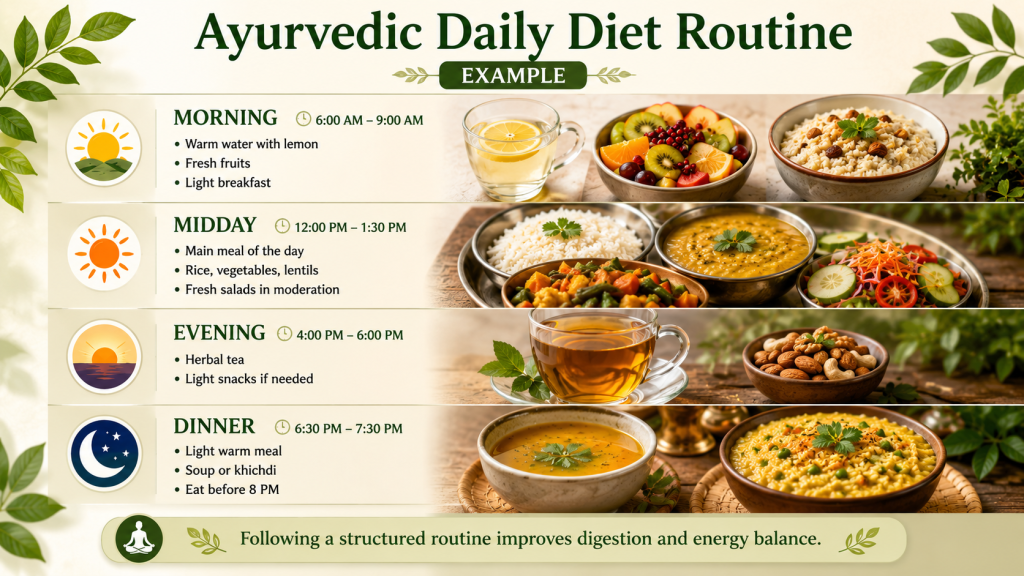
Here is a simple Ayurvedic daily diet routine:
Morning
- Warm water with lemon
- Fresh fruits
- Light breakfast
Midday
- Main meal of the day
- Rice, vegetables, lentils
- Fresh salads in moderation
Evening
- Herbal tea
- Light snacks if needed
Dinner
- Light warm meal
- Soup or khichdi
- Eat before 8 PM
Following a structured routine improves digestion and energy balance.
Benefits of Following an Ayurvedic Diet
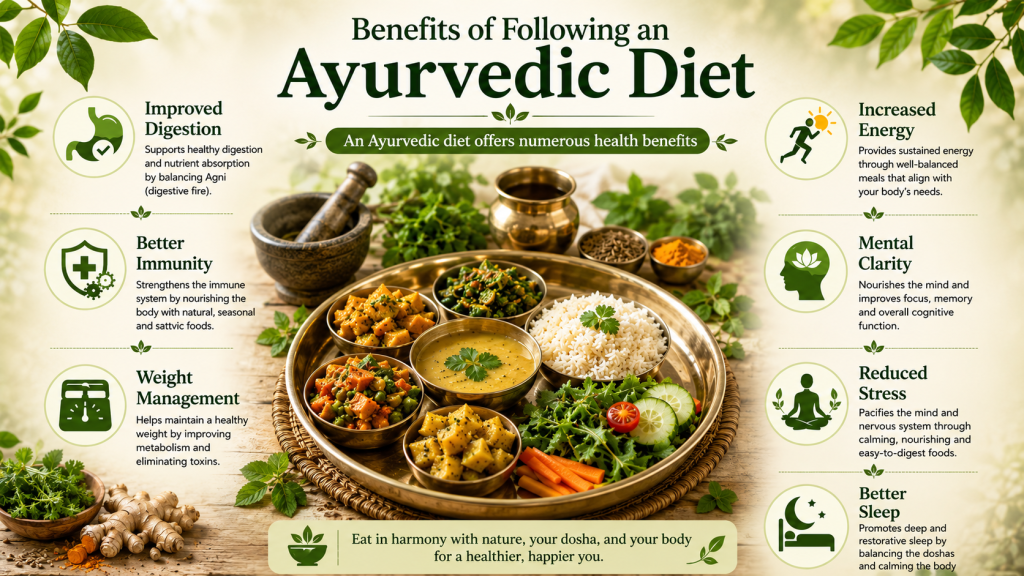
An Ayurvedic diet offers numerous health benefits:
Improved Digestion
Supports healthy metabolism and nutrient absorption.
Better Immunity
Natural foods and spices strengthen the immune system.
Weight Management
Balanced eating prevents obesity and unhealthy cravings.
Increased Energy
Proper digestion provides steady energy throughout the day.
Mental Clarity
Healthy foods support emotional balance and concentration.
Reduced Stress
Mindful eating and balanced nutrition help reduce anxiety.
Better Sleep
Proper meal timing and digestion improve sleep quality.
Common Mistakes to Avoid in an Ayurvedic Diet
Avoid these common mistakes:
- Skipping meals
- Eating processed foods
- Overeating
- Eating late at night
- Drinking cold water during meals
- Eating while stressed
- Ignoring seasonal eating
Correcting these habits can significantly improve health.
Ayurveda and Modern Lifestyle Disorders
Modern lifestyle disorders are often linked to poor eating habits and stress. Ayurveda offers natural support for conditions such as:
- Obesity
- Diabetes
- Acidity
- Digestive disorders
- Anxiety
- Fatigue
- Sleep disturbances
A balanced Ayurvedic diet helps prevent and manage these issues naturally.
WEBSITE : Dr.K.Dhanvanthri Ayurveda Vaidya Salai
Conclusion
Ayurveda teaches that food is one of the most powerful tools for maintaining health and preventing disease. By following Ayurvedic diet principles, individuals can improve digestion, increase immunity, maintain healthy body weight, and achieve mental and emotional balance.
Simple habits such as eating fresh foods, maintaining regular meal timings, using natural spices, staying hydrated, and practicing mindful eating can create lasting positive changes in overall health.
Unlike restrictive modern diets, Ayurveda encourages balance, sustainability, and harmony with nature. Adopting Ayurvedic diet tips for a healthy lifestyle can help you live with greater vitality, peace, and wellness for years to come.
Read Also : Ayurvedic Treatment for Arthritis in Madurai | Dhanvanthri Ayurvedic Hospital Madurai
