Kasayavasthi Ayurvedic Treatment – Benefits, Procedure, Uses & Healing Effects
Ayurveda, the ancient Indian system of natural healing, offers several specialized therapies for detoxification, rejuvenation, and disease management. Among these traditional Panchakarma procedures, Kasayavasthi holds a significant place for its deep cleansing and balancing effects on the body. It is primarily used to pacify aggravated Vata dosha and eliminate accumulated toxins from the colon and lower gastrointestinal tract.
Kasayavasthi is a type of Vasti therapy, one of the five major detoxification methods in Panchakarma. In this procedure, herbal decoctions prepared from medicinal plants are administered through the rectal route under the supervision of an Ayurvedic physician. This therapy is highly regarded because Ayurveda considers the colon to be the main seat of Vata dosha. By cleansing and nourishing this area, Kasayavasthi helps restore balance throughout the body.
This article explains everything about Kasayavasthi, including its meaning, ingredients, procedure, benefits, indications, contraindications, and post-treatment care.
What is Kasayavasthi?
The term Kasayavasthi comes from two Sanskrit words:
- Kasaya – Herbal decoction
- Vasti – Medicated enema therapy
Thus, Kasayavasthi refers to a therapeutic enema prepared using herbal decoctions, medicated oils, honey, rock salt, and herbal pastes. It is commonly called Niruha Vasti or Asthapana Vasti in classical Ayurvedic texts.
Unlike ordinary enemas used in modern medicine, Kasayavasthi is not merely for bowel evacuation. It is a deeply therapeutic treatment designed to detoxify the body, improve organ function, nourish tissues, and balance doshas.
Ayurveda describes Vasti therapy as one of the most powerful treatments because it directly influences the digestive system, nervous system, joints, muscles, and reproductive organs.
Importance of Kasayavasthi in Ayurveda
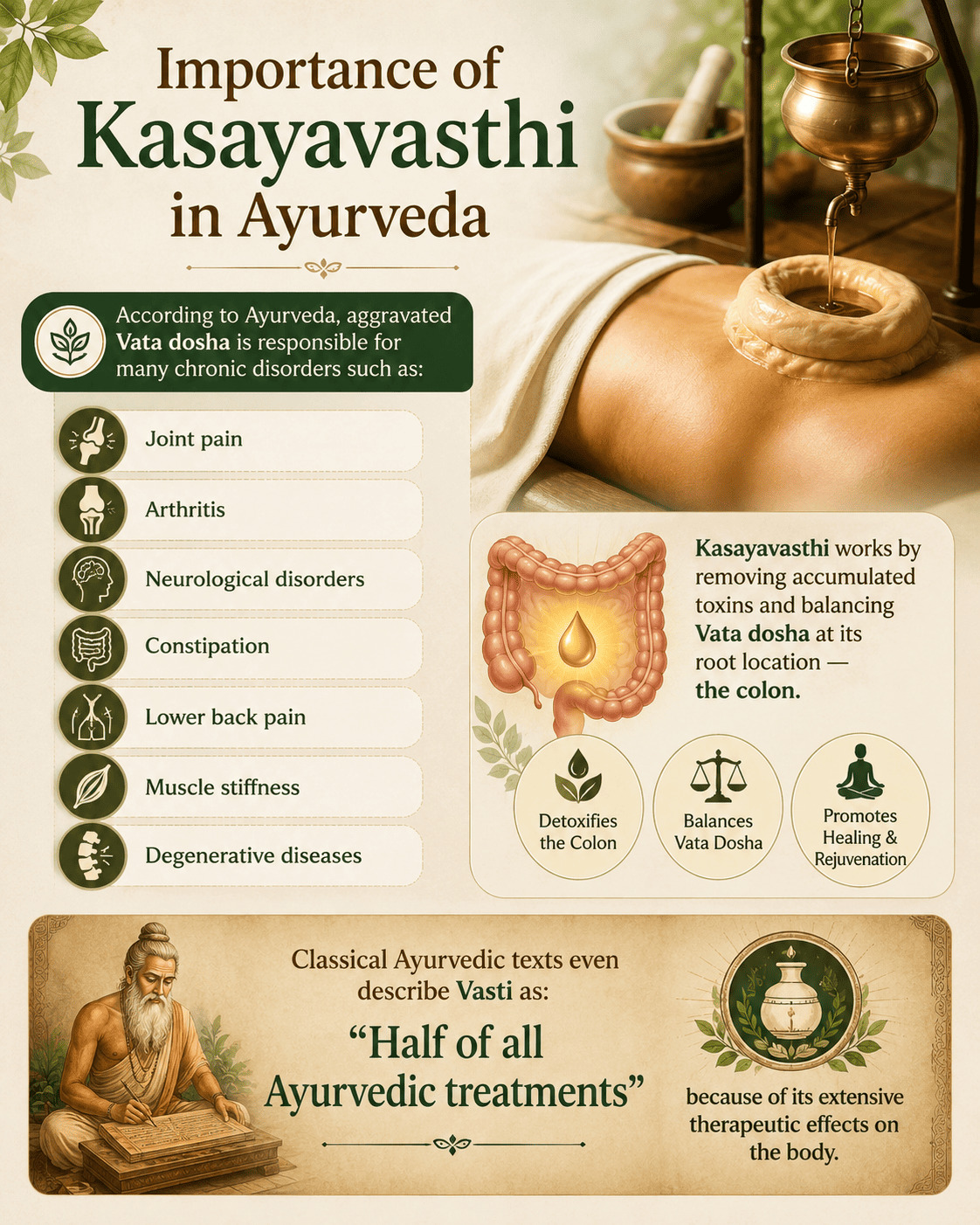
According to Ayurveda, aggravated Vata dosha is responsible for many chronic disorders such as:
- Joint pain
- Arthritis
- Neurological disorders
- Constipation
- Lower back pain
- Muscle stiffness
- Degenerative diseases
Kasayavasthi works by removing accumulated toxins and balancing Vata dosha at its root location — the colon.
Classical Ayurvedic texts even describe Vasti as:
"Half of all Ayurvedic treatments"
because of its extensive therapeutic effects on the body.
Ingredients Used in Kasayavasthi
The medicinal formulation used in Kasayavasthi varies according to the patient's condition, age, body constitution, and disease. However, the common ingredients include:
1. Herbal Decoction (Kasaya)
This forms the major component of the therapy. Decoctions are prepared using herbs such as:
- Dashamoola
- Bala
- Guduchi
- Rasna
- Eranda
- Punarnava
These herbs possess anti-inflammatory, detoxifying, and Vata-pacifying properties.
2. Medicated Oils
Herbal oils are added to lubricate the intestines and nourish tissues. Common oils include:
- Dhanwantharam Tailam
- Sahacharadi Tailam
- Mahanarayana Tailam
3. Honey
Honey acts as a catalyst and helps blend the ingredients properly.
4. Rock Salt
Rock salt improves absorption and helps loosen toxins from tissues.
5. Herbal Paste (Kalka)
Medicinal herbal pastes enhance the potency of the therapy.
Procedure of Kasayavasthi
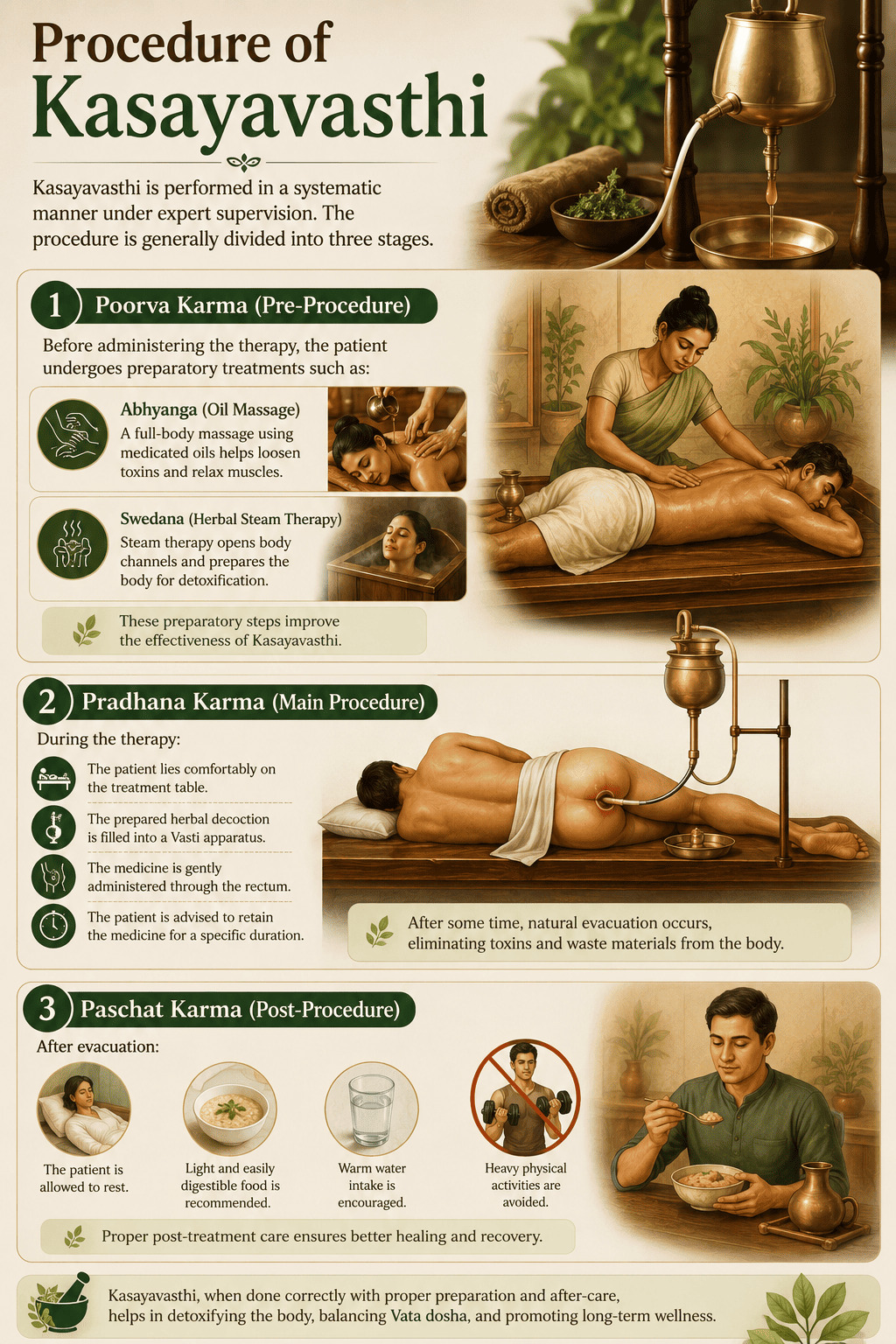
Kasayavasthi is performed in a systematic manner under expert supervision. The procedure is generally divided into three stages.
1. Poorva Karma (Pre-Procedure)
Before administering the therapy, the patient undergoes preparatory treatments such as:
Abhyanga (Oil Massage)
A full-body massage using medicated oils helps loosen toxins and relax muscles.
Swedana (Herbal Steam Therapy)
Steam therapy opens body channels and prepares the body for detoxification. These preparatory steps improve the effectiveness of Kasayavasthi.
2. Pradhana Karma (Main Procedure)
During the therapy:
- The patient lies comfortably on the treatment table.
- The prepared herbal decoction is filled into a Vasti apparatus.
- The medicine is gently administered through the rectum.
- The patient is advised to retain the medicine for a specific duration.
After some time, natural evacuation occurs, eliminating toxins and waste materials from the body.
3. Paschat Karma (Post-Procedure)
After evacuation:
- The patient is allowed to rest.
- Light and easily digestible food is recommended.
- Warm water intake is encouraged.
- Heavy physical activities are avoided.
Proper post-treatment care ensures better healing and recovery.
Benefits of Kasayavasthi
Kasayavasthi provides numerous health benefits for both physical and mental well-being.
1. Detoxifies the Body
The therapy effectively removes accumulated toxins (Ama) from the colon and digestive tract.
2. Balances Vata Dosha
Kasayavasthi is one of the best Ayurvedic treatments for controlling aggravated Vata.
3. Relieves Constipation
The herbal decoction softens stools and promotes healthy bowel movements.
4. Reduces Joint Pain
It is highly effective in conditions like:
- Osteoarthritis
- Rheumatoid arthritis
- Gout
- Cervical spondylosis
5. Improves Nervous System Function
The therapy nourishes nerves and helps in neurological disorders.
6. Strengthens Muscles and Bones
Kasayavasthi improves tissue nourishment and supports musculoskeletal health.
7. Enhances Digestion
It stimulates digestive fire (Agni) and improves metabolism.
8. Improves Mobility and Flexibility
People suffering from stiffness and restricted movement often experience significant relief.
9. Supports Reproductive Health
Certain Vasti formulations help improve reproductive system function.
10. Promotes Overall Rejuvenation
The therapy provides a sense of lightness, freshness, and improved energy.
Types of Vasti in Ayurveda
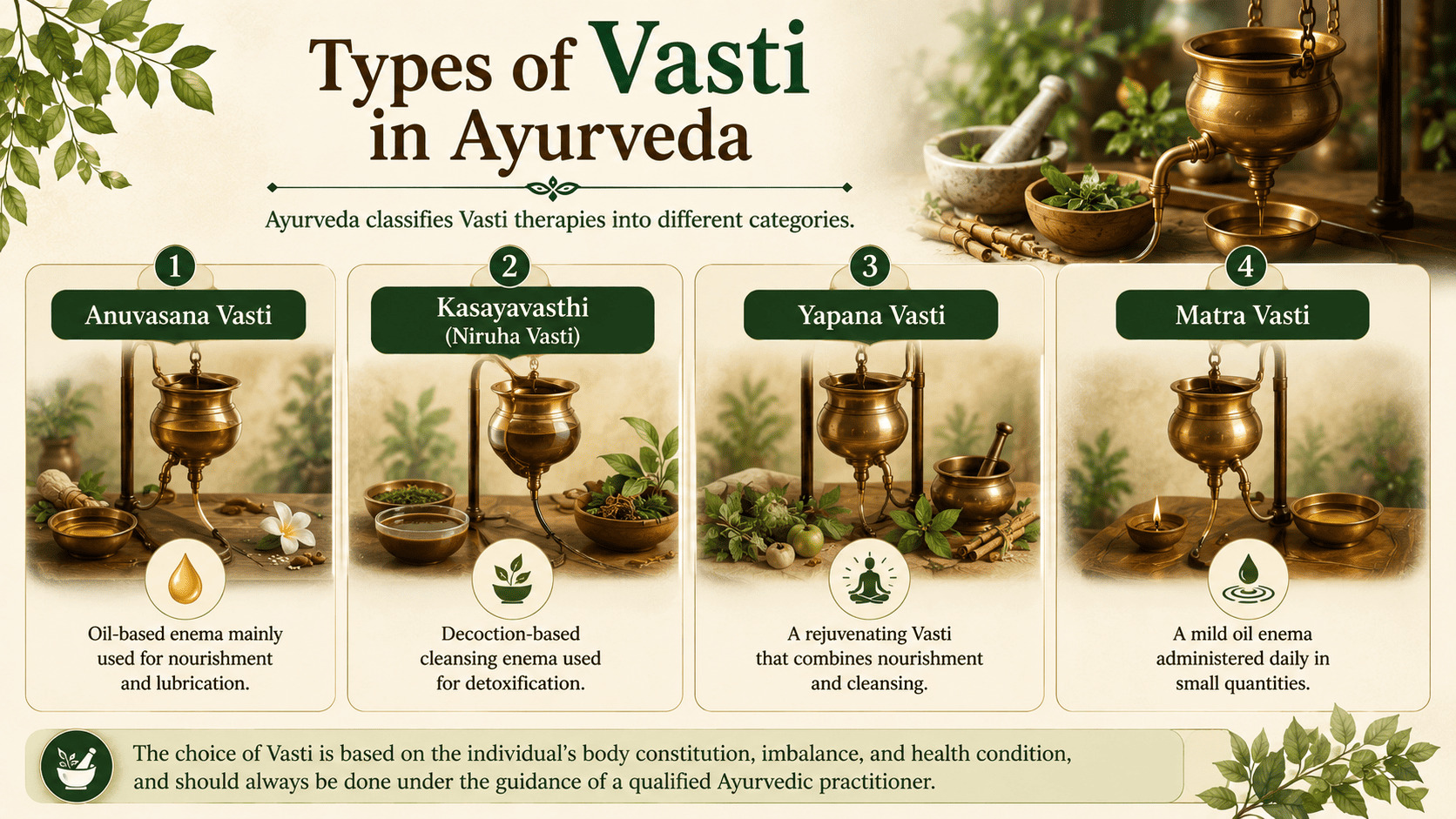
Ayurveda classifies Vasti therapies into different categories.
1. Anuvasana Vasti
Oil-based enema mainly used for nourishment and lubrication.
2. Kasayavasthi (Niruha Vasti)
Decoction-based cleansing enema used for detoxification.
3. Yapana Vasti
A rejuvenating Vasti that combines nourishment and cleansing.
4. Matra Vasti
A mild oil enema administered daily in small quantities.
Duration of Kasayavasthi Treatment
The duration depends on the disease condition and physician's recommendation.
Generally:
- A single session may last 30–60 minutes.
- Treatment courses can range from:
- 5 days
- 8 days
- 15 days
- 30 days
Some Panchakarma programs include a combination of oil and decoction Vastis administered in a specific sequence.
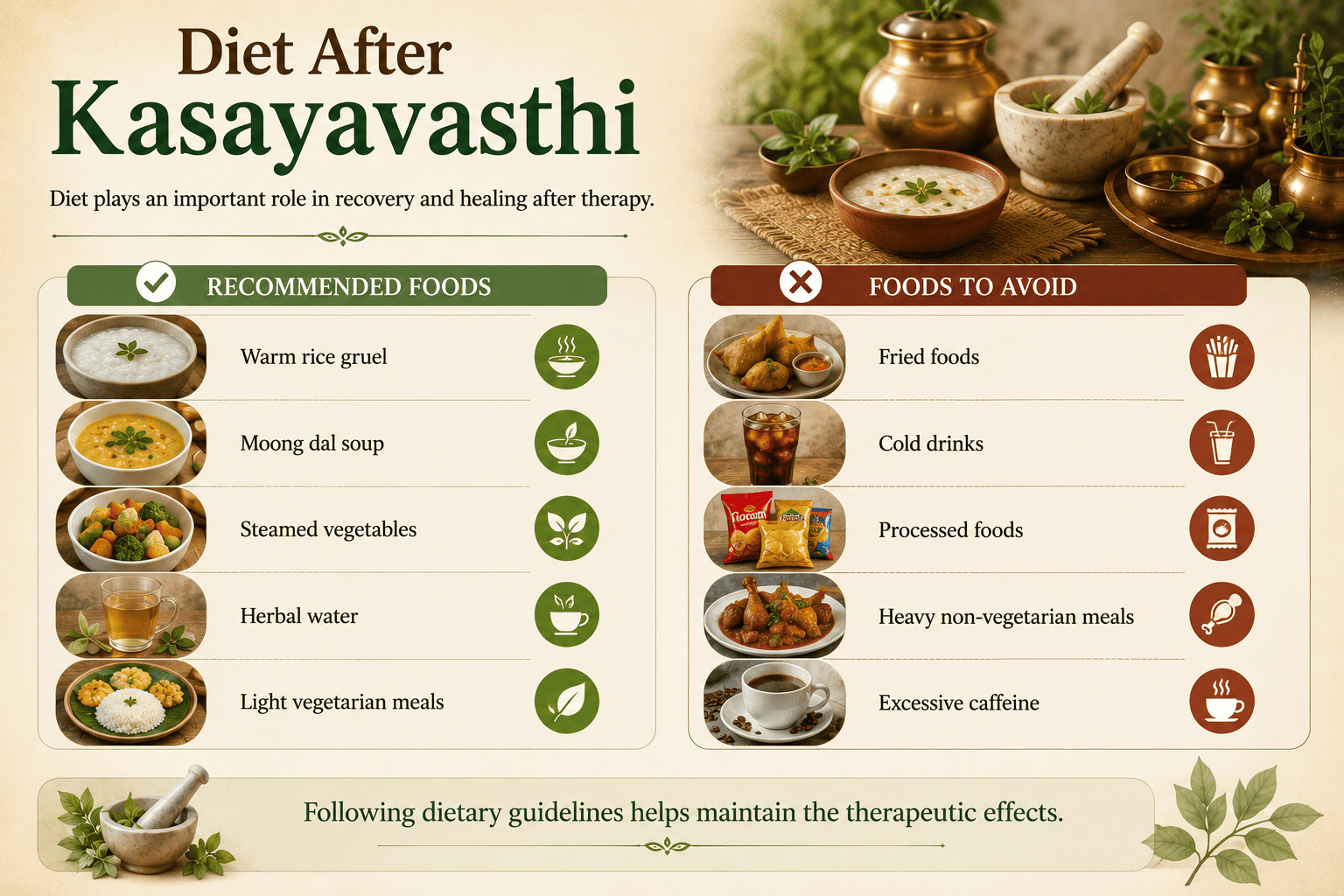
Diet After Kasayavasthi
Diet plays an important role in recovery and healing after therapy.
Recommended Foods
- Warm rice gruel
- Moong dal soup
- Steamed vegetables
- Herbal water
- Light vegetarian meals
Foods to Avoid
- Fried foods
- Cold drinks
- Processed foods
- Heavy non-vegetarian meals
- Excessive caffeine
Following dietary guidelines helps maintain the therapeutic effects.
Precautions During Kasayavasthi
Kasayavasthi should always be performed by qualified Ayurvedic professionals.
Important precautions include:
- Proper patient assessment
- Sterile equipment usage
- Correct medicine preparation
- Monitoring during therapy
- Following post-treatment diet
Self-administration is not recommended.
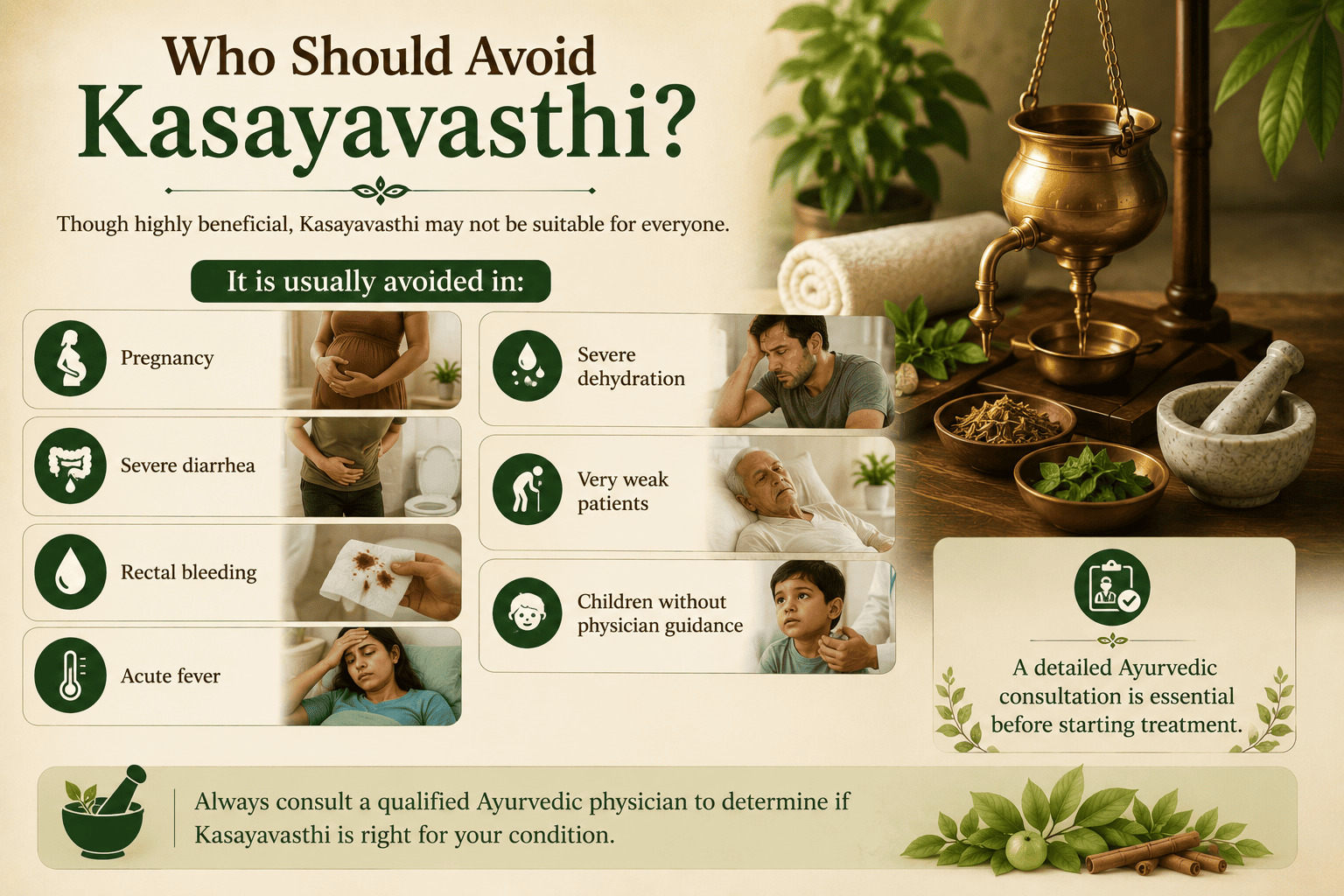
Who Should Avoid Kasayavasthi?
Though highly beneficial, Kasayavasthi may not be suitable for everyone.
It is usually avoided in:
- Pregnancy
- Severe diarrhea
- Rectal bleeding
- Acute fever
- Severe dehydration
- Very weak patients
- Children without physician guidance
A detailed Ayurvedic consultation is essential before starting treatment.
Side Effects of Kasayavasthi
When performed correctly, Kasayavasthi is generally safe. However, improper administration may cause:
- Abdominal discomfort
- Loose stools
- Fatigue
- Mild cramps
- Dehydration
These effects are usually temporary and manageable under supervision.
In Summary
Kasayavasthi is one of Ayurveda’s most powerful Panchakarma therapies for detoxification, rejuvenation, and Vata balance. Using carefully prepared herbal decoctions, medicated oils, and traditional techniques, this therapy cleanses the colon, nourishes tissues, and restores internal harmony.
From chronic joint pain and constipation to neurological disorders and stress-related conditions, Kasayavasthi provides wide-ranging therapeutic benefits. When performed under expert Ayurvedic supervision, it can significantly improve physical health, mobility, digestion, and overall quality of life.
As Ayurveda continues to gain global recognition, therapies like Kasayavasthi remain valuable for individuals seeking natural healing and holistic wellness.
Book Appointment for Kasayavasthi Treatment
Book your Kasayavasthi treatment today to detoxify your body, balance Pitta, and restore overall health and clarity. Book your appointment now for complete wellness.
Frequently Asked Questions
Kasayavasthi is a decoction-based medicated enema therapy used in Ayurveda to detoxify the body and balance Vata dosha.
No, the procedure is usually comfortable and performed gently by trained Ayurvedic professionals.
A session generally takes about 30 to 60 minutes, including preparation and rest.
It is commonly used for arthritis, constipation, back pain, neurological disorders, and digestive problems.
When done properly, side effects are minimal. Mild abdominal discomfort or loose stools may occur temporarily.
You can get authentic Kasayavasthi treatment at Dhanvanthri Ayurveda Vaidya Salai in Madurai from experienced Ayurvedic practitioners.